

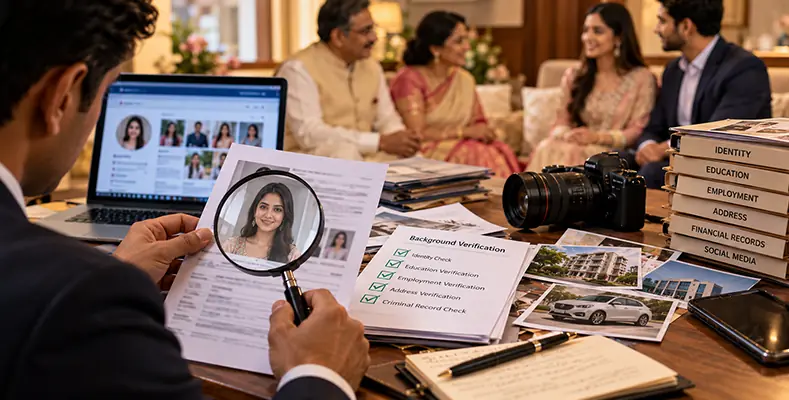
How to Verify a Marriage Proposal in India Before Saying Yes
Marriage is one of the biggest decisions in life. In India, it also joins two families. So it makes sense to verify a marriage proposal in India before you commit.
Many families rely on a first meeting, a biodata, and a few references. That is rarely enough. A careful, respectful check helps you confirm what you were told. It also helps you decide with confidence, not assumptions.
This guide explains what to check, how to check it, and where personal checks stop working. It also covers when professional help makes sense.
Why Is Background Verification Important Before Marriage?
A proposal often comes through relatives, matrimonial sites, or mutual contacts. Most of these sources are honest. However, they cannot confirm every claim.
Biodatas are written to impress. Profiles can be polished. Even well-meaning relatives may repeat information they never checked.
Background verification matters for three reasons:
- It confirms basic facts. Age, job, education, and marital status should match what was shared.
- It reduces risk. Misrepresentation can lead to emotional and financial harm.
- It builds trust. Open answers early on set a healthy tone for the relationship.
Verification is not about doubting people. Instead, it is about making sure the facts support the decision. Both families can do this politely and in good faith.
What Details Should You Verify About a Prospective Partner?
Start with the basics. Then move to deeper checks only if something feels unclear.
Core details to confirm
- Identity and age: Ask to see a government ID during a formal meeting. Check that the name and date of birth match the biodata.
- Marital status: Confirm whether the person was married before. Ask about divorce papers or a death certificate if relevant.
- Family background: Understand the family’s occupation, residence, and reputation in their community.
- Health and lifestyle: Discuss major health conditions, habits, and expectations openly.
- Intentions and expectations: Talk about career plans, living arrangements, and children.
Marital status deserves extra care. Divorce or a pending case should be disclosed early. You can also search court case status on the government’s e-Courts services portal if you have the right details.
Keep conversations respectful. A person who answers openly is usually a good sign. Evasive answers deserve a closer look.
How to Verify Employment and Educational Claims
Job titles and degrees are the most common claims in any proposal. They are also easy to check.
For employment
- Ask for the company name, designation, and office location.
- Check the company’s official website and LinkedIn page.
- Request a recent offer letter or appointment letter.
- Call the company’s main number, not a number given by the person.
- Ask a colleague or mutual contact, if one exists, to confirm the role.
For education
- Ask for degree certificates and mark sheets.
- Confirm that the university or institute is recognised.
- Use the National Academic Depository to check whether a digital record exists for certain degrees.
- For foreign degrees, check the institution’s own verification process.
Be careful with vague answers. Phrases like “senior role in a multinational” or “own business abroad” need details. A genuine professional can usually explain their work clearly.
For proposals involving someone living overseas, extra steps apply. Our guide on NRI background verification explains how to handle cross-border checks.
How to Check for Potential Financial Red Flags
Money problems can strain a marriage. You do not need to know every rupee. Still, a broad picture of financial stability is reasonable.
Look for these warning signs
- Constant talk of urgent loans or business troubles.
- Pressure to share money, jewellery, or documents early.
- A lifestyle that does not match the stated income.
- Reluctance to discuss debts or responsibilities.
- Requests to invest in a “special opportunity.”
- Ask about regular income, savings, and any major liabilities.
- Compare their lifestyle with their stated job and salary.
- Observe how the family handles money conversations.
- Never transfer money or share banking details before marriage.
Not sure what to verify first?
Talk to an experienced investigator in a private, no-pressure call. We will tell you which checks are worth doing for your situation.
How to Approach Online and Social Media Information Responsibly
Social media can reveal useful context. It can also mislead. Therefore, treat it as one clue and not as proof.
Useful things to review
- Whether profile details match the biodata.
- Public posts that show interests, friendships, and values.
- Professional profiles that support job claims.
- Consistency between different accounts.
Stay responsible while doing this
- Use only publicly available information.
- Do not hack, impersonate, or contact people under false pretences.
- Avoid judging someone based on one old photo or post.
- Remember that people often present an edited version of their lives online.
Respecting privacy is both ethical and practical. India’s data protection rules also limit how personal information may be collected and used. Therefore, stay with open, public sources and ask the person directly when something is unclear.
What Are the Limitations of Personal Background Checks?
Personal checks help a great deal. Nevertheless, they have clear limits.
- Limited access: You cannot see private records, court histories, or financial files easily.
- Biased sources: Relatives and friends may share only positive details.
- Missing context: A single document rarely tells the whole story.
- Time and distance: Checking a person in another city or country is difficult.
- Emotional involvement: Families often overlook warning signs they do not want to see.
If answers conflict or key details stay unclear, do not ignore the doubt. That is the point at which many families look for outside help.
When Should You Consider Professional Verification of a Marriage Proposal?
Professional help is worth considering in specific situations:
- The person lives abroad or in another state.
- Details given by the family do not match what you find.
- There is a history of divorce, litigation, or hidden relationships.
- The family is evasive or rushes the decision.
- You simply want an independent, discreet second opinion.
A professional agency can verify identity, employment, residence, and reputation through lawful field inquiries. It can then give you a written report to review with your family.
Look for an agency that works legally and discreetly. It should explain its method, protect your confidentiality, and set clear expectations. If you want to understand what to budget, read our guide on private detective cost in India.
Frequently Asked Questions
Yes. Checking public and voluntarily shared information is legal. However, you must not hack accounts, steal data, or use illegal surveillance. Reputable agencies follow lawful methods only.
Start with identity, age, and marital status. Then confirm employment and education. These are the most common areas where facts are misstated.
Yes. You can confirm many details yourself through documents, official portals, and open conversations. Professional help becomes useful when information is unclear or the person lives far away.
Simple checks may take a few days. Detailed inquiries, especially across cities or countries, can take longer. The timeline depends on the scope.
Common red flags include hidden marital history, inconsistent job details, pressure to decide quickly, financial secrecy, and refusal to share documents. One red flag does not prove wrongdoing. Still, it deserves a closer look.
No. Most families see it as responsible. Ask politely and explain that you want both sides to feel comfortable.
Want a confidential check before you decide?
Our team handles every case with care, discretion, and lawful methods.
Disclaimer: This article is for general information only and is not legal advice. Consult a qualified lawyer for legal questions.